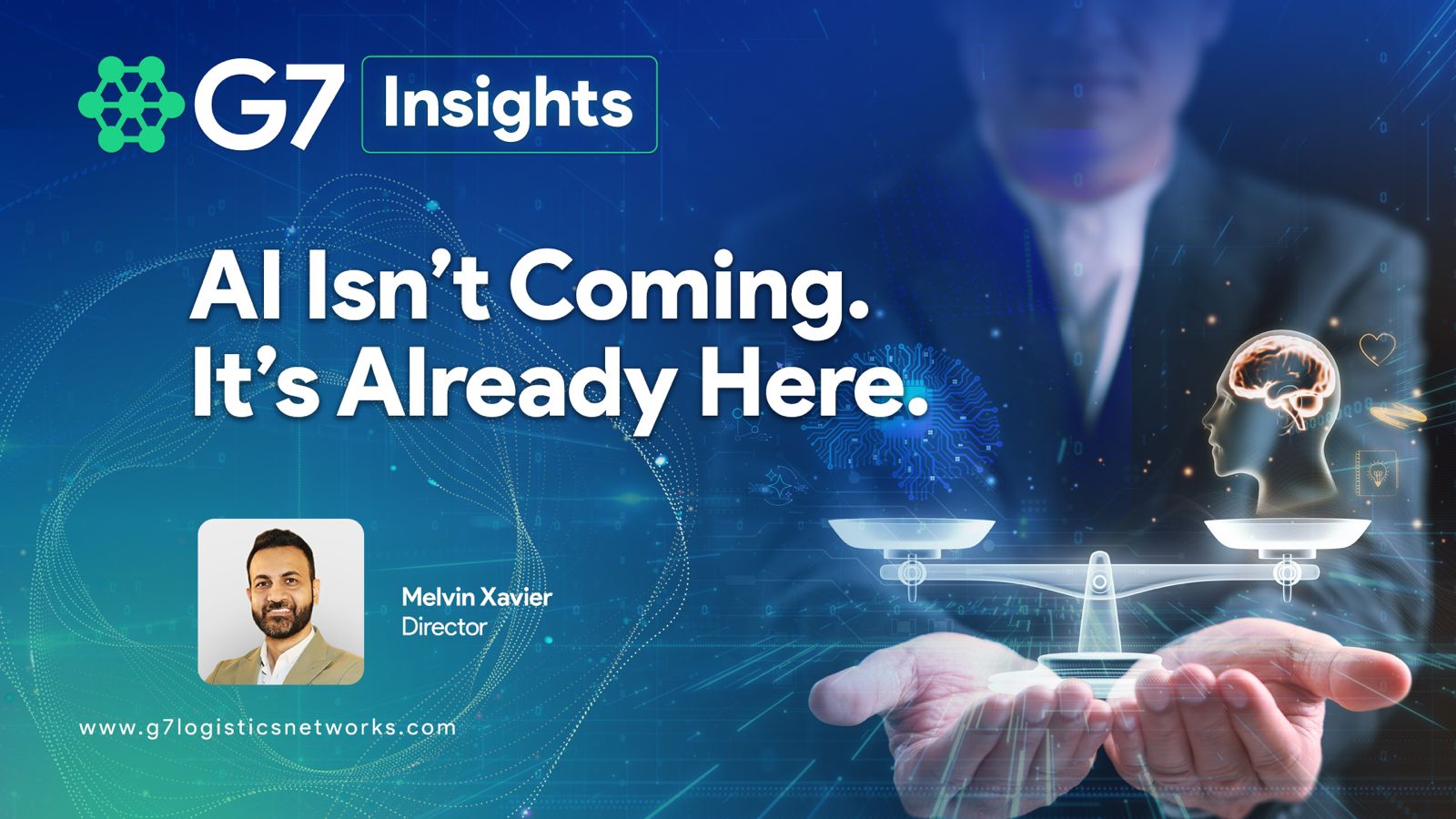
AI Isn’t Coming. It’s Already Here.
A few weeks ago, Meta announced the layoff of approximately 8,000 employees while simultaneously shifting thousands of others into AI-focused roles. The message was clear: companies are no longer asking if AI will transform their business. They are preparing for a future where it already has.
For many employees across industries, this creates understandable anxiety. Headlines focus on job losses, automation, and uncertainty. But I believe we are asking the wrong question.
The question is not whether AI will replace people.
The question is whether people who use AI will replace people who don’t.
For freight forwarders, the impact will likely be gradual but significant.
In the short term, AI will eliminate countless hours of repetitive work. Quotation preparation, shipment tracking updates, report generation, customer communication, sales prospecting, SOP creation, and even claims handling can now be accelerated dramatically.
In the medium term, companies that successfully integrate AI will operate with leaner teams, faster response times, and lower administrative costs. A customer who once waited hours for a quote may receive one in minutes. Internal reports that took a day to prepare may be generated instantly.
In the long term, the competitive advantage may no longer belong to the largest freight forwarder. It may belong to the most technologically enabled one.
That sounds threatening. But I see an enormous opportunity.
Throughout history, every major technological shift has created winners and losers. The winners were rarely those who resisted change. They were the ones who adapted first.
As leaders, our responsibility is not to protect our teams from AI.
Our responsibility is to prepare our teams for AI.
Every freight forwarder should be asking:
* Have we trained our employees to use AI effectively?
* Which tasks consume the most time and can be automated?
* How can AI help our sales teams generate more opportunities?
* How can AI help operations teams become more accurate and productive?
* How can AI help management make better decisions?
The most successful companies over the next decade will not necessarily employ fewer people. They will employ people who are significantly more powerful because of the tools available to them.
At G7, I believe our industry should view AI not as a threat to jobs, but as an opportunity to elevate them.
The future freight forwarder will still need relationships, trust, problem-solving ability, local knowledge, and commercial instinct. AI cannot replace those qualities.
But it can make every one of us faster, smarter, and more effective.
The companies that embrace that reality today will be the ones leading our industry tomorrow.